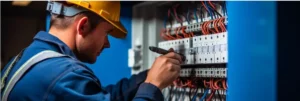
Rewiring a house in Santa Ana is a big project, and it is one that most homeowners do not think about until something forces them to. A house fire traced to old wiring, a letter from their insurance company refusing to renew, or a home inspector flagging aluminum wiring during a sale — these are the moments that make people finally deal with it. But rewiring is better handled on your own timeline than under pressure. This guide explains when rewiring is needed, what it involves, how much it costs in Santa Ana, and what you can expect from start to finish.
What Does Rewiring a House Actually Mean?
When people say “rewiring a house,” they mean replacing the branch circuit wiring — the wires that run from your electrical panel through the walls and ceilings to every outlet, switch, and light fixture. This is different from replacing the main service entrance cable (the thick wires coming in from the street), though those are often addressed at the same time if they are also in bad shape.
A full house rewire touches every circuit in the home. A partial rewire addresses specific areas — the kitchen, the bathrooms, or the aluminum-wired circuits in certain rooms. Partial rewires are less expensive and less disruptive, and they are often the right choice when only certain areas of the home have a problem.
Along with the new wire, a rewire typically means new outlet boxes, new outlets and switches, and often a new panel if the existing one is also outdated. Wiring installation and wiring repair are core services Zoom Electricians provides throughout Santa Ana and Orange County.
Which Santa Ana Homes Need Rewiring Most?
Age is the single biggest factor. Santa Ana has a lot of homes built between the 1950s and 1980s, and each decade had its own wiring issues:
- Homes built before 1960: May have knob-and-tube wiring. This is the oldest residential wiring type still found in California homes. It has no ground wire, no plastic sheathing, and was built for the electrical loads of a very different era. Many insurance companies will not cover homes with active knob-and-tube wiring anymore.
- Homes built from 1965 to 1973: This was the aluminum wiring era. Copper prices spiked during this period, so builders switched to aluminum for branch circuit wiring. Aluminum wiring expands and contracts more than copper when it heats and cools, which loosens connections over time. Loose connections get hot. Hot connections can start fires. The U.S. Consumer Product Safety Commission has documented higher fire risk in homes with aluminum branch circuit wiring. Many Santa Ana homes from this era still have it.
- Homes built from the 1970s through the 1980s: Usually copper wiring, which is in better shape — but often undersized for modern loads, missing AFCI protection, and without ground conductors on older circuits. Many outlets in these homes are still the two-prong type, which lack the grounding that modern equipment expects.
“When I open a wall in one of these older Santa Ana homes and find cloth-insulated wiring, the insulation just crumbles when I touch it. That wiring has been in place for 60 years and the rubber coating is done. The wire itself might be okay, but the protection around it is gone.”
— Steve, Zoom Electricians
From our wiring assessments across Santa Ana and Orange County, about 3 in 10 homes built before 1975 that we inspect have at least one wiring condition that needs professional attention — whether a full rewire, aluminum wiring remediation, or targeted circuit replacement. Most homeowners have no idea until an electrician opens a wall and shows them what is in there.
Aluminum Wiring — Rewire or Remediate?
If your Santa Ana home was built between 1965 and 1973, there is a real chance it has aluminum branch circuit wiring. The question homeowners always ask is: do I need to fully rewire the house, or is there another option?
The answer is: there is a middle option, called remediation. The CPSC-approved approach involves applying an approved anti-oxidant compound at every connection point (every outlet, switch, and fixture), replacing all devices with ones rated for aluminum wiring (called co-alr rated devices), and using approved connectors where copper pigtails meet aluminum conductors. When this is done completely and correctly throughout the entire home, it significantly reduces the fire risk without replacing all the wire.
However, remediation has its limits. It addresses the connection points but leaves aluminum conductors in the walls. If you are planning to sell your home in the next few years, many buyers and their agents will still be concerned about aluminum wiring even when it has been remediated. Full rewiring removes the issue entirely. For homeowners who plan to stay long-term, remediation is a legitimate and lower-cost option. For those who expect to sell, full rewiring is almost always the stronger investment.
How the Rewiring Process Works
A full house rewire is a multi-day project. Here is the typical sequence for a Santa Ana home:
- Assessment and planning: The electrician walks the home, looks at the existing wiring condition, plans the new circuit layout, and figures out how to access the wall cavities with the least disruption.
- Permit application: A full rewire requires a permit from City Building Department. This is submitted before work begins.
- Rough-in phase: Old wiring is removed where accessible. New wiring is run from the panel through the walls and ceilings to each outlet, switch, and fixture location. New outlet boxes are installed.
- Rough-in inspection: A city inspector checks the new wiring before any drywall is closed. This is a critical step — walls cannot be closed until the inspector signs off.
- Finish phase: Outlets, switches, fixtures, and the new panel (if included) are installed and connected.
- Final inspection: The inspector returns to verify everything is complete and meets code.
The rough-in inspection requirement is important. It means an independent set of eyes confirms the wiring is correct before it gets hidden in the walls. This protects you as the homeowner.
Will the Walls Need to Be Cut Open?
This is the question that worries most homeowners. The answer depends on the home. In Santa Ana homes with accessible attics — single-story ranch-style houses and many bungalows — most of the new wire can be run through the attic without opening any walls. This dramatically reduces the amount of drywall work needed after the electrical work is done.
In two-story homes, or in rooms with no attic access above them, targeted wall openings are sometimes needed. An experienced electrician minimizes these openings and uses strategic access points to run wire as efficiently as possible. The number and size of openings is always discussed with the homeowner before the work begins. Drywall patching after the electrical work is typically done by a separate contractor, though some companies offer this as part of their full project scope.
Cost of House Rewiring in Santa Ana
Rewiring costs depend on home size, construction type, and how accessible the wiring paths are. General ranges for Santa Ana projects:
- Partial rewire (one to three circuits or one area): $800 to $3,000
- Aluminum wiring remediation (pigtailing throughout the home): $2,000 to $5,000 for a typical Santa Ana home
- Full rewire, home under 1,200 sq ft: $5,000 to $9,000
- Full rewire, home 1,200 to 2,000 sq ft: $8,000 to $15,000
- Full rewire, home over 2,000 sq ft: $12,000 and up, depending on access and complexity
These numbers cover the electrical work only. Drywall repair, if needed, is a separate cost that varies based on how many access points were required.
Insurance and Real Estate Implications
Wiring condition is a material disclosure item in California real estate transactions. A buyer’s home inspector who finds knob-and-tube or aluminum wiring in your Santa Ana home will note it in the inspection report, and it will almost always become a negotiating point — either a price reduction, a credit for remediation, or in some cases a deal that falls through completely.
Homeowners who address their wiring before listing have a much cleaner sale. They do not have to negotiate around a known issue, and they do not have to worry about whether the buyer’s lender will require the wiring to be addressed as a loan condition.
On the insurance side, several major California carriers are now non-renewing policies on homes with active knob-and-tube wiring. If your carrier has sent you a notice, the timeline in that letter is real. Contact Zoom Electricians to schedule a wiring assessment and discuss your options. If your renovation also includes plumbing — common when kitchens or bathrooms are being updated — our partner network includes a Long Beach plumber across Southern California.
Living in Your Home During a Rewire
Most homeowners stay in their home during a rewiring project. The electricians work area by area, restoring power to completed sections before moving to the next. The kitchen circuits and bathroom circuits are usually prioritized so you can keep cooking and bathing with minimal interruption. There will be days when certain rooms have no power, but it is usually manageable. If the whole home needs to be rewired in a very short time and the work is happening everywhere at once, some families arrange to stay somewhere else for a night or two — but this is the exception, not the rule.
A clear schedule, discussed before the project starts, makes this much easier to plan around. Zoom Electricians always gives homeowners a day-by-day work plan before starting any rewiring project in Santa Ana so there are no surprises.
When to Rewire vs. When to Repair in Santa Ana
Not every wiring problem in a Santa Ana home requires a full rewire. The decision between repair and rewire depends on the specific condition found and the broader context of the home’s electrical system. Here is a framework for thinking about it:
Repair is usually right when: The problem is localized to one circuit or one area. The wiring type is copper and the insulation is in good condition. The issue is a connection failure at a device or junction box, not a problem with the wire itself. The home is not facing other electrical system issues at the same time.
Rewiring is usually right when: The wiring type is aluminum or knob-and-tube throughout the home. Multiple circuits are showing problems simultaneously. The wiring insulation is degraded — brittle, crumbling, or cracked — across multiple areas. The homeowner is planning to sell within five years and wants to eliminate a significant disclosure issue. Insurance renewal has been conditioned on wiring remediation.
A good electrician will be honest about which approach makes sense for your specific Santa Ana property. The goal is not to sell the largest project possible — it is to solve the actual problem in the most appropriate way for the home and the homeowner’s situation.
How California’s ADU Boom Affects Rewiring Decisions in Santa Ana
Adding an ADU to a Santa Ana property often triggers a rewire conversation, even when the homeowner initially called only about the ADU’s electrical requirements. Here is why: when a city inspector comes to a property to issue an ADU permit, they review the entire property’s electrical situation, not just the ADU itself. If the main house has aluminum wiring, knob-and-tube wiring, or a flagged panel brand, the inspector may require those issues to be addressed as a condition of the ADU permit.
This can surprise homeowners who expected the ADU electrical work to be a defined, limited scope. It is worth understanding before starting an ADU project: if your Santa Ana home has known wiring issues, the ADU permit process may require addressing them. Building that into your ADU budget and timeline from the start is much better than discovering it mid-project when construction is already underway.
Why Santa Ana Homeowners Choose Zoom Electricians
When Santa Ana homeowners need electrical work done, they want a few things above everything else: someone licensed and insured, someone who pulls the permits, someone who handles the rebate paperwork so they do not have to, and someone who shows up when they say they will and does the work right the first time. Those are the things we focus on at every job in Santa Ana and across Orange County.
We serve all of Santa Ana and the surrounding Orange County area with licensed C-10 electrical contractors who know the local housing stock, the local permit process, and the specific electrical conditions that come up again and again in homes built here. We are not a national call center that farms jobs out to whoever is available — we are a local team that works in these neighborhoods every day.
Every project we do comes with:
- A written estimate before any work starts — itemized, with the permit fee included, and specific about what panel brand, breaker types, and scope of work we are quoting
- Licensed work with proper permits — we pull permits for every project that requires one. No exceptions, no shortcuts. Your work is inspected and documented.
- Rebate assistance included — we assess your project for every applicable federal IRA and SCE rebate program, handle all the paperwork, and make sure you get every dollar you qualify for
- Clear scheduling and communication — you know when we are coming, what we are doing, and what to expect on installation day before the day arrives
The easiest way to get started is to call and describe what you are dealing with. Whether it is a panel that keeps tripping breakers, a new EV that needs a home charger, a wiring question about an older home, or an insurance letter requiring an electrical upgrade — we have dealt with it many times in Santa Ana and we can tell you quickly whether it is something that needs immediate attention, something that can be scheduled, or something you can monitor for now.
Contact Zoom Electricians to schedule your Santa Ana electrical assessment or get a written estimate for any of the services covered in this guide. For Orange County projects that also involve residential electrical services across multiple trades — including plumbing for kitchen and bathroom renovations, garage conversions, or ADU construction — ask about our partner network when you call.
Frequently Asked Questions About Electrical Work in Santa Ana
Before scheduling any electrical project, homeowners in Santa Ana typically have a few common questions. Here are direct answers to the ones we hear most often:
How long does the average panel upgrade take in Santa Ana? A standard 100-amp to 200-amp panel upgrade takes one installation day — typically four to eight hours for the electrical work — plus the time for the permit approval and the post-installation inspection. From first call to completed inspection, most projects take one to two weeks total.
Will my insurance go down after a panel upgrade? Some insurance carriers offer lower premiums for homes with updated electrical systems. More commonly, the benefit is the elimination of a surcharge or the restoration of coverage that was being canceled or non-renewed because of the old panel. Contact your carrier directly after your upgrade is complete and the inspection is signed off to ask about any premium adjustment.
Can I stay in my home during the work? Yes, for panel upgrades and most electrical projects. There will be a period during installation day — typically four to eight hours — when the power is off to the whole house. For rewiring projects, power is off in the areas being worked on but usually maintained in other areas. The electrician coordinates with you on the schedule to minimize disruption to your daily routine.
What is the difference between a panel upgrade and a service upgrade? A panel upgrade replaces the main panel box and the breakers inside it. A service upgrade also replaces the service entrance — the wiring from the utility meter to the panel. Some properties need both; others only need the panel. The assessment visit determines which scope your property needs.