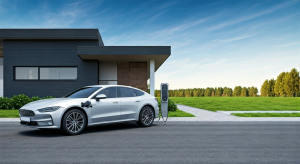
EV charger installation in Santa Monica is one of the most common calls we get right now, and for good reason. Electric vehicles are everywhere in Los Angeles County, and driving one without home charging is like having a phone with no charger at home. You can always find a public charger, but it is not the same as plugging in every night and waking up to a full battery. This guide covers everything you need to know about getting a Level 2 home charger installed in Santa Monica — what it takes, what it costs, and how the rebate programs can bring that cost down.
Level 1 vs Level 2 Charging — What Is the Difference?
When you buy an electric car, it comes with a Level 1 charging cord. This cord plugs into any regular 120-volt outlet — the same kind you use for a lamp or a phone charger. Level 1 is convenient because you do not need any installation. But it is very slow. Most EVs add about 3 to 5 miles of range for every hour of charging on Level 1.
If your car has a 60-kilowatt-hour battery and you come home with it near empty, Level 1 would take 30 to 40 hours to charge it back up. That is not a problem if you only drive a few miles a day. But for most Santa Monica drivers who commute or run errands, it is not enough.
Level 2 charging is completely different. It uses a 240-volt circuit — the same voltage as your electric dryer or oven. A Level 2 charger adds 20 to 30 miles of range per hour. That means a near-empty car is fully charged overnight, every night, no matter how far you drove. For almost every EV owner, Level 2 is the right choice for home charging.
According to the U.S. Department of Energy’s Alternative Fuels Data Center, more than 80 percent of EV charging in the U.S. happens at home, and Level 2 chargers are the standard for home installation. The extra upfront cost of installation pays off quickly in convenience and time saved.
Panel Assessment — The First Step Before Anything Else
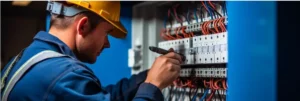
Before anyone buys a charger unit or schedules an installation, the first thing that has to happen is a panel assessment. A licensed electrician looks at your existing electrical panel and runs a load calculation — basically adding up all the electrical demands your home already puts on the panel and figuring out if there is room for a new 40-amp EV charging circuit.
This step matters a lot. A Level 2 EV charger draws up to 9,600 watts of continuous power. That is a significant load. If your home has an older 100-amp panel that is already running air conditioning, kitchen appliances, and everything else, adding an EV circuit without checking capacity first is not safe.
“Half the EV charger calls I get in Santa Monica turn into a panel upgrade conversation. The customer bought the car and the charger unit before anyone checked the panel. We show up and find a 1970s 100-amp panel with every slot full. Always check the panel first — it saves a lot of headaches.”
— Sako, Zoom Electricians
From our EV charger installation work across Santa Monica and Los Angeles County, roughly 5 in 10 homes with older 100-amp panels need either a panel upgrade or a load management system before we can safely add the EV circuit. This is not bad news — it just means the panel assessment has to come first. A good electrician tells you this upfront before any money changes hands.
Choosing Your Charger Unit
The charger unit itself — the box on the wall — is separate from the installation work. Most electricians can help you choose one, and some will supply the unit as part of the project. Here are the most popular options for Santa Monica homeowners:
- ChargePoint Home Flex: Works with all EV brands. You can adjust the amperage from 16 to 50 amps depending on your panel’s available capacity. Has scheduling features through its app so you can charge during cheap off-peak hours. A great all-around choice.
- Tesla Wall Connector: Made for Teslas but works with other EVs through an adapter. Fast, reliable, and well-built. Simple to use.
- Emporia Level 2 Charger: Has built-in load management — it automatically slows down charging if the rest of your home is using a lot of power at the same time. Good option for homes with smaller panels that cannot support full EV load alongside everything else.
- Grizzl-E Classic: Weatherproof, durable, and designed for outdoor use. Very reliable with fewer app features — just plug in and charge. Good for outdoor parking areas.
- JuiceBox 40: Smart charger with app control, scheduling, and LADWP TOU integration. Popular in California because of its compatibility with time-of-use rate programs.
Your electrician will help you match the right unit to your panel’s available capacity, your parking setup, and your budget. Do not buy a unit before you know your panel can support it.
The Permit Process for EV Charger Installation in Santa Monica
Every Level 2 EV charger installation in Santa Monica requires a permit from City Building Department before work begins. This is not optional. The permit covers the 240-volt circuit, the new breaker in the panel, and the charger mounting location. For straightforward residential installations, permits are usually approved in one to three business days.
After the work is done, a city inspector comes out to check it. The inspector looks at the wire gauge, the breaker size, how the charger is mounted, how the wiring is protected outdoors if applicable, and how the circuit is labeled in the panel.
Skipping the permit is not worth it. If you sell your home and a buyer’s inspector finds an unpermitted EV charger circuit, you may have to remove it and reinstall it with a permit before the sale can close. That costs far more than the permit would have. It can also affect your homeowner’s insurance if there is ever a claim related to the circuit.
Rebates That Reduce Your Cost in Santa Monica
EV charger installation qualifies for several rebate and incentive programs that can cut your cost significantly:
- Federal IRA Tax Credit (30%): The Inflation Reduction Act gives homeowners a federal tax credit equal to 30 percent of the cost of the EV charger equipment and installation. There are income and location requirements, but for most Santa Monica homeowners this is a real saving. Talk to a tax professional about how it applies to your situation.
- LADWP Clean Fuel Rewards: LADWP runs periodic rebate programs for Level 2 charger installation and enrollment in time-of-use rate plans. Check the LADWP website for current availability — these programs open and close throughout the year.
- California Clean Vehicle Rebate Project: Beyond the vehicle purchase rebates, income-qualified California households may access additional help with charging infrastructure. Visit cleanvehiclerebate.org for details.
Zoom Electricians handles all rebate documentation for every EV charger project we install. You do not have to figure out the paperwork. We file on your behalf and make sure you get every dollar you qualify for.
Smart Charging and Off-Peak Rates
LADWP offers time-of-use rate plans where electricity costs less during off-peak hours — usually late evening to early morning. If your charger unit has scheduling features (most modern ones do), you can set it to start charging automatically during cheap-rate hours. This is one of the best ways to reduce your ongoing electricity costs as an EV owner.
For a car driven 40 miles per day at California electricity rates, switching from unscheduled daytime charging to scheduled overnight off-peak charging can save $400 to $600 per year on your electric bill. The charger unit pays for itself faster than most people expect.
EV Charging for Renters and Landlords in Santa Monica
If you rent your home, you have rights. California Civil Code Section 1947.6 says landlords cannot unreasonably say no to a tenant who requests an EV charger installation at their assigned parking spot. The tenant has to use a licensed contractor, pull a permit, carry insurance, and agree to restore the parking area when they move out.
For Santa Monica landlords, proactively adding EV charging to your rental property is a smart move. EV ownership in Los Angeles County is growing fast, and renters increasingly look for charging access when choosing a place to live. Properties with EV charging attract more applicants and can command higher rents. Zoom Electricians’s commercial electrical services include multi-unit EV charging infrastructure for apartment buildings and commercial parking facilities.
Planning for Two Cars
If you expect to own two electric vehicles in the next few years, tell your electrician when you schedule the first charger installation. They can rough in the conduit and wiring for a second charger at the same time, leaving it ready to connect when you need it. The cost of doing this at the same time as the first installation is a fraction of what a second full project would cost later. A little planning now saves a lot of money later.
For complete EV charger assessment, permit management, installation, and rebate filing in Santa Monica and Los Angeles County, contact Zoom Electricians. If your garage renovation also includes plumbing — for example, a utility sink — our partner network includes a plumbing services in Anaheim for customers who need both trades on the same project.
What to Expect on Installation Day
For a straightforward Santa Monica installation — a 200-amp panel with open capacity and a run to an attached garage — the installation usually takes four to six hours. Here is what happens:
- The electrician arrives, confirms the panel assessment, and confirms the charger mounting location with you
- A new 40-amp or 50-amp breaker is installed in the panel
- Wire is run from the panel to the garage or parking area — this may go through the attic or along the wall depending on your home’s layout
- The charger unit is mounted and connected
- The circuit is tested and labeled in the panel
- The inspector visits (usually a day or two later) and signs off
Most homeowners are charging their car the same evening the work is done. The inspector visit comes after, and it is usually a quick check once the permit paperwork is in order. Zoom Electricians residential services cover every step of this process from the first call to the final inspection sign-off.
Why Santa Monica Homeowners Choose Zoom Electricians
When Santa Monica homeowners need electrical work done, they want a few things above everything else: someone licensed and insured, someone who pulls the permits, someone who handles the rebate paperwork so they do not have to, and someone who shows up when they say they will and does the work right the first time. Those are the things we focus on at every job in Santa Monica and across Los Angeles County.
We serve all of Santa Monica and the surrounding Los Angeles County area with licensed C-10 electrical contractors who know the local housing stock, the local permit process, and the specific electrical conditions that come up again and again in homes built here. We are not a national call center that farms jobs out to whoever is available — we are a local team that works in these neighborhoods every day.
Every project we do comes with:
- A written estimate before any work starts — itemized, with the permit fee included, and specific about what panel brand, breaker types, and scope of work we are quoting
- Licensed work with proper permits — we pull permits for every project that requires one. No exceptions, no shortcuts. Your work is inspected and documented.
- Rebate assistance included — we assess your project for every applicable federal IRA and LADWP rebate program, handle all the paperwork, and make sure you get every dollar you qualify for
- Clear scheduling and communication — you know when we are coming, what we are doing, and what to expect on installation day before the day arrives
The easiest way to get started is to call and describe what you are dealing with. Whether it is a panel that keeps tripping breakers, a new EV that needs a home charger, a wiring question about an older home, or an insurance letter requiring an electrical upgrade — we have dealt with it many times in Santa Monica and we can tell you quickly whether it is something that needs immediate attention, something that can be scheduled, or something you can monitor for now.
Contact Zoom Electricians to schedule your Santa Monica electrical assessment or get a written estimate for any of the services covered in this guide. For Los Angeles County projects that also involve residential electrical services across multiple trades — including plumbing for kitchen and bathroom renovations, garage conversions, or ADU construction — ask about our partner network when you call.
Frequently Asked Questions About Electrical Work in Santa Monica
Before scheduling any electrical project, homeowners in Santa Monica typically have a few common questions. Here are direct answers to the ones we hear most often:
How long does the average panel upgrade take in Santa Monica? A standard 100-amp to 200-amp panel upgrade takes one installation day — typically four to eight hours for the electrical work — plus the time for the permit approval and the post-installation inspection. From first call to completed inspection, most projects take one to two weeks total.
Will my insurance go down after a panel upgrade? Some insurance carriers offer lower premiums for homes with updated electrical systems. More commonly, the benefit is the elimination of a surcharge or the restoration of coverage that was being canceled or non-renewed because of the old panel. Contact your carrier directly after your upgrade is complete and the inspection is signed off to ask about any premium adjustment.
Can I stay in my home during the work? Yes, for panel upgrades and most electrical projects. There will be a period during installation day — typically four to eight hours — when the power is off to the whole house. For rewiring projects, power is off in the areas being worked on but usually maintained in other areas. The electrician coordinates with you on the schedule to minimize disruption to your daily routine.
What is the difference between a panel upgrade and a service upgrade? A panel upgrade replaces the main panel box and the breakers inside it. A service upgrade also replaces the service entrance — the wiring from the utility meter to the panel. Some properties need both; others only need the panel. The assessment visit determines which scope your property needs.