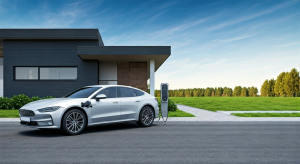
EV charger installation in Santa Ana is one of the fastest-growing electrical requests we receive across Orange County, and for clear reasons. California has one of the highest rates of electric vehicle ownership in the country, and the gap between Level 1 charging — the slow cord that comes in the box with your EV — and Level 2 home charging is the difference between waking up to a full battery every morning and perpetually managing a half-charged car. This guide covers everything Santa Ana homeowners need to know about getting a home Level 2 charger installed: what the process involves, what it costs, and how the available rebate and incentive programs reduce that cost.
Level 1 vs Level 2 Charging — The Real Difference
Level 1 charging uses the standard 120-volt outlet cord that ships with your EV. It requires no installation, works in any household outlet, and adds 3 to 5 miles of range per hour of charging. For a vehicle driven fewer than 20 miles per day with eight or more hours overnight to charge, Level 1 is adequate. For most Santa Ana commuters, that is not the situation.
Level 2 charging uses a dedicated 240-volt circuit — the same voltage as your electric dryer. A Level 2 charger adds 20 to 30 miles of range per hour. A car that returns home at 15 percent charge is fully charged by morning, every morning, regardless of how far you drove. This is the charging standard that makes EV ownership genuinely convenient rather than a daily range anxiety exercise.
The installation involves a licensed C-10 electrician running a dedicated circuit from your electrical panel to your garage or parking location, mounting the EVSE unit, and connecting everything. Once installed, you plug in when you arrive home and the rest is automatic.
Panel Assessment — The Step That Has to Come First
Before anyone purchases a charger unit or books an installation appointment, the correct first step is a panel load assessment. A Level 2 EV charger on a 40-amp circuit draws up to 9,600 watts of continuous power. If your Santa Ana home has a 100-amp panel already running AC, kitchen appliances, laundry, and general household loads, adding an EV circuit without checking capacity is not safe.
“Half of the EV charger calls I get in Santa Ana turn into a panel conversation the moment I look at the box. The homeowner has already bought the car and the charger before anyone checked whether there was room. The assessment has to come first — always.”
— Sako, Zoom Electricians
From our EV installation work across Santa Ana and Orange County, roughly 5 in 10 homes with older 100-amp panels need either a panel upgrade or a load management solution before a 40-amp EV circuit can be safely added. A qualified electrician tells you this upfront, before money changes hands.
| Item | Typical Cost | Notes |
|---|---|---|
| Circuit installation (labor only) | $450 – $1,300 | Depends on wire run length and panel access |
| EVSE unit (ChargePoint, Tesla, Emporia, JuiceBox) | $250 – $800 | Hardware cost separate from installation |
| Federal IRA Tax Credit (30%) | –30% of total cost | Applied at tax filing; consult tax professional |
| SCE Clean Fuel Rewards | Varies — check sce.com | Programs open and close throughout the year |
| Panel upgrade if required first | $2,400 – $4,200 | ~5 in 10 Santa Ana homes with 100A panels need this |
Choosing an EVSE Unit for Your Santa Ana Home
The charger hardware is separate from the installation work. The most widely installed units in Orange County residential properties:
- ChargePoint Home Flex: Adjustable from 16 to 50 amps. Works with all EV brands. App-based scheduling for SCE off-peak rate programs. Excellent general-purpose choice for Santa Ana homeowners.
- Tesla Wall Connector: Native Tesla integration with universal adapter for other EVs. Fast, reliable, clean profile on the wall. Popular choice for Tesla owners who want the Wall Connector’s charge management features.
- Emporia Level 2 Charger: Built-in load management automatically reduces charging speed when other home systems are drawing peak power. Good solution for homes where adding full EV load would otherwise overload the panel.
- JuiceBox 40: Smart scheduling integrates with SCE Time-of-Use rate plans. Charging during SCE off-peak hours (typically 9 PM to noon weekdays) can save $350 to $550 per year on your electricity bill for a car driven 40 miles per day.
The Permit Process in Santa Ana
Every Level 2 EV charger installation in Santa Ana requires a permit from the City of Santa Ana Building Department before work begins. The permit covers the dedicated 240-volt circuit, the new breaker in the panel, and the charger mounting location. Most residential permits are approved in one to three business days. After installation, a city inspector verifies the circuit, breaker sizing, and outdoor wiring protection.
Skipping the permit is not a shortcut — it creates a disclosed problem at resale when a buyer’s inspector finds the unpermitted circuit, and it can affect insurance coverage if there is ever an electrical claim. Zoom Electricians handles all permit applications and inspection coordination as part of every EV charger installation in Santa Ana.
EV Charging for Renters and Landlords in Santa Ana
California Civil Code Section 1947.6 protects Santa Ana renters who want EV charging at their assigned parking. Landlords cannot unreasonably deny a tenant’s request to install an EV charger if the tenant uses a licensed contractor, pulls the required permit, maintains adequate insurance, and agrees to restore the space when they leave.
For Santa Ana landlords, proactively adding EV charging infrastructure is an increasingly strong tenant attraction tool. Zoom Electricians installs multi-unit EV charging for apartment complexes and commercial parking facilities, including networked systems with usage monitoring and tenant billing capabilities. If your ADU or rental property project also involves plumbing work — utility sinks, bathroom additions — our partner network includes a Santa Ana plumber for trades coordination.
How California’s Rebate Programs Can Reduce Your Cost
The cost of electrical upgrades in Santa Ana is more manageable than most homeowners assume once you understand how California’s rebate programs stack together. Zoom Electricians handles all the paperwork and applies the savings as a point-of-sale invoice discount — you pay the reduced amount upfront, not the full price with a reimbursement to chase later.
Here is how the three layers work:
- Federal IRA HEAR Rebate: Up to $4,000 for qualifying panel upgrades for income-eligible households. This is a direct rebate, not a tax deduction. Eligibility is based on Orange County area median income thresholds. The larger your electrification project, the more you can qualify for.
- TECH Clean California: California’s statewide program funds panel upgrades and home electrification packages — especially when combined with qualifying improvements like heat pump HVAC or heat pump water heaters. Single-family home funding is currently operating on a waitlist. Get pre-qualified and on the reservation list now — when Phase II funding opens, pre-qualified households move to the front of the queue. Multifamily properties and commercial buildings have active, available funding right now.
- SCE (Southern California Edison) Utility Rebates: Southern California Edison (SCE) offers rebate programs for panel upgrades connected to EV charger installation, heat pump HVAC, and home electrification. Check sce.com for current program availability and amounts — these change throughout the year.
The important detail that most homeowners miss: panel upgrades and rewiring projects qualify for the largest rebates when they are part of a broader home electrification package — specifically when combined with EV charger installation, a heat pump HVAC system, or a heat pump water heater. Zoom Electricians assesses your full project during the initial visit to identify every program you qualify for and maximize your total rebate stack.
Our 4-step process: Pre-Qualification → Portal Reservation Submission → Technical Installation → Point-of-Sale Invoice Discount applied at completion. We wait for state reimbursement so you do not have to.
Off-peak tip: SCE’s Time-of-Use (TOU) rate plans charge less for electricity during off-peak hours (typically 9 PM to noon on weekdays). If your EV charger or appliances can be scheduled to run during these hours, the annual savings add up quickly.
The data on home EV charging infrastructure investment is compelling for Santa Ana homeowners. The DOE Alternative Fuels Data Center confirms over 80 percent of all EV charging in the U.S. happens at home — making a reliable Level 2 home charger the single most critical EV accessory. The International Energy Agency projects EV sales will exceed 17 million globally in 2024. The U.S. Department of Energy confirms the federal Alternative Clean Energy tax credit covers 30 percent of home EV charger equipment and installation costs. The U.S. Environmental Protection Agency estimates switching from a gasoline vehicle to an EV reduces lifecycle carbon emissions by approximately 50 percent in California’s current grid mix. The U.S. Bureau of Labor Statistics projects electrician employment to grow 11 percent through 2033, driven primarily by residential EV infrastructure buildout across Southern California.
Why Santa Ana Homeowners Choose Zoom Electricians
When homeowners in Santa Ana need electrical work done right, they look for three things: a licensed C-10 contractor who pulls permits, someone who handles the rebate paperwork so they do not have to, and a team that gets the job done correctly the first time. Zoom Electricians delivers all three on every project in Santa Ana and across Orange County.
Call us directly at (714) 786-1027 or contact us through the Santa Ana location page to schedule an assessment or get a written estimate.
Every project comes with:
| What We Provide | Detail |
|---|---|
| Free written estimate | Itemized before any work starts — panel brand, scope, and permit fee all specified |
| Licensed C-10 with permits | We pull permits for every required project. Work is inspected and documented. |
| Rebate pre-qualification | We handle TECH Clean California and utility rebate applications — savings applied as point-of-sale invoice discount |
| Same-day assessments available | Call (714) 786-1027 — we serve Santa Ana and surrounding areas with fast response times |